Alhamdulilah kali in kumpulan kami telah menerima menerima Par Excellence Award di 46th International Convention on Quality Control Circles (ICQCC) 2021
Alhamdulilah dari dua projek inovasi yang saya sertai dalam (IIDEX) 2019 kali ini , inovasi WeGBY CHAIR telah menerima Anugerah SPECIAL AWARD - DIAMOND dan GOLD manakala inovasi RDMS (Reference Desk Management System ) mendapat anugerah SILVER
Alhamdulilah kali ini di anugerahkan sebagai Fasiltator Terbaik di Konvensyen KIK Peringkat UiTM 2019 Zon Tengah sekali lagi setelah menerima pada tahun 2016
Alhamdulilah tugasan kali ini berjaya membawa kumpulan KIK PTAR i-Clique meraih Anugerah Emas dalam Konvensyen Team Excellent Peringkat Wilayah 2018 ( Wilayah Selatan ) di Holiday Villa Johor Bahru City Centre
Alhamdulilah dapat juga melakarkan sejarah memenangi anugerah emas bagi penyertaan di International Invention, Innovation and Technology Exhibition (ITEX 2017) pula dengan produk inovasi Solat Alert Software (SAS). ....
Menerima anugerah Pingat Emas dalam Malaysia Technology Expo ( MTE) 2009 yang telah diadakan pada 19 hingga 21 Februari 2009 di PWTC, Kuala Lumpur. Pelbagai hasil penyelidikan
telah dipamerkan oleh 460 peserta/ kumpulan daripada pelbagai IPTA, badan swasta, MRSM dan lain-lain organisasi.
Alhmdulilah Tahniah dan Syabas kepada Kumpulan Inovatif dan Kreatif (KIK) i-Clique dari Perpustakaan Tun Abdul Razak (PTAR) UiTM di atas kejayaan meraih Anugerah Emas (Gold Award) 4 Bintang dalam Annual Productivity & Innovation Conference and Exposition ( APIC ) 2018 di Sunway Convention Centre. Konvensyen ini telah berlangsung pada 13 hingga 15 November 2018. Sebagai penyelaras KIK PTAR saya rasa lega keran tercapai jua KPI untuk peringkat kebangsaan tahun 2018 ini.
Kumpulan I-Clique terdiri daripada :
Penyelaras KIK PTAR UITM Fasilitator : Wan Izzatul Fahrah binti Wan Ishak Ketua Kumpulan : Wan Noor Sazidah Binti Wan Fauzi Ahli-ahli 1. Nur Azini Binti Azman 2. Nur Lian Binti Abd Halid 3. Zuhaslinda Sulaiman 4. Nur Fatin Nadia Binti Mohamed Nadzri 5. Mohd Azrry Bin Zakaria 6. Muhammad Asyraf Mohd Hata Tajuk Projek : Data penggunaan bahan koleksi khas tidak tepat
Kuala Lumpur (Malaysia) was named World Book Capital for the year 2020 by the Director-General of UNESCO, Audrey Azoulay, on the recommendation of the World Book Capital Advisory Committee. The city was selected because of the strong focus on inclusive education, the development of a knowledge-based society and accessible reading for all parts of the city’s population. With the slogan "KL Baca – caring through reading", the program focuses on four themes: reading in all its forms, development of the book industry infrastructure, inclusiveness and digital accessibility, and empowerment of children through reading. Among other events and activities there will be the construction of a book city (the Kota Buku Complex), a reading campaign for train commuters, enhancing of digital services and accessibility by the National Library of Malaysia for the disabled, and new digital services for libraries in 12 libraries in poor housing areas of Kuala Lumpur. The city's objective is to foster a culture of reading and inclusiveness - “A city that reads is a city that cares” – emphasizing ubiquitous access to books throughout the city. The city’s ambitious programme for World Book Capital is linked to the Vision 2020 for Kuala Lumpur and the eco-city project called the River of Life with open-air bookshops and libraries populating the newly-restored waterways of the city. The year of celebrations will start on 23 April 2020, on the World Book and Copyright Day. Cities designated as UNESCO World Book Capital undertake to promote books and reading and to organize activities over the year. As the twentieth city to bear the title since 2001, Kuala Lumpur follows Sharjah (2019), and Athens (2018). Past winners include Madrid (2001), Alexandria (2002), New Delhi (2003), Anvers (2004), Montreal (2005), Turin (2006), Bogota (2007), Amsterdam(2008), Beirut (2009), Ljubljana (2010), Buenos Aires (2011), Erevan (2012), Bangkok (2013), Port Harcourt (2014), Incheon (2015), Wroclaw (2016). The application of the city of Kuala Lumpur was accepted by an Advisory Committee, comprising representatives of the International Publisher's Association (IPA), the International Federation of Library Associations (IFLA) and UNESCO.
14th October 2017Malaysia’s capital Kuala Lumpur has applied to become the UNESCO
World Book Capital in 2020. At the Frankfurter Buchmesse, the Malaysia
Pavilion introduced the campaign ‘KL BACA – A Reading City’.
Hari ini saya diminta berkongsi sedikit maklumat di Bengkel Lonjakan Perkhidmatan Perpustakaan , 15 September 2018, Sabtu 8.00am - 5.00 pm di Bilik Seminar PTAR Utama.
Pada tahun 2018 ini, Perpustakaan UiTM memberi fokus kepada lonjakan perkhidmatan
bagi memastikan peranan perpustakaan dan pustakawan dalam menyokong
inisiatif universiti ke arah kampus digital dan penggiatan budaya
membaca dikalangan warga universiti dapat dilaksanakan . Perpustakaan
kini secara aktif merekabentuk semula perkhidmatan dan kemudahan
perpustakaan sejajar dengan perubahan yang berlaku terhadap masyarakat,
persekitaran dan perkembangan pesat teknologi maklumat. Era digital ini
memberi cabaran baharu kepada perpustakaan untuk berusaha dan berjuang
agar terus maju kehadapan. Bengkel ini diadakan khusus kepada staf dan pelajar Universiti Teknologi MARA yang terdiri daripada Pegawai Perhubungan
perpustakaan dan Pustakawan Rujukan.
Ada pun objektif Bengkel ini seperti berikut
i.Mengadakan
sesi sumbang saran dan perbincangan aktif khususnya mengenai aspek
perkhidmatan dan kemudahan baharu yang boleh ditawarkan dan dinikmati
oleh pengguna dalam memperkasakan peranan PTAR di Universiti.
ii.Mengenalpasti
keperluan dan kehendak utama pengguna bagi memantapkan budaya membaca,
meningkatkan jumlah penggunjung fizikal dan menyokong aktiviti
pengajaran, pembelajaran serta penyelidikan di Perpustakaan UiTM.
iii.Menjana idea baru yang segar daripada pengguna dalam membantu perancangan merekabentuk semula perkhidmatan perpustakaan UiTM.
Bengkel ini diberikan kepda beberapa Kumpulan Sasaran , sesi pertama kepada Majlis Perwakilan Pelajar/Kelab Sahabat PTAR/Persatuan Pelajar UiTM manakala sesi kedua pada minggu hadapan kepada Pegawai Perhubungan Perpustakaan (Pustakawan/Pensyarah) dan sesterunya sesi ketiga Pustakawan Rujukan dan Pustakawan dimana kami akan memberi dan juga memerlukan input bagi menambah baik lagi perkhidmatan yang sedia ada.
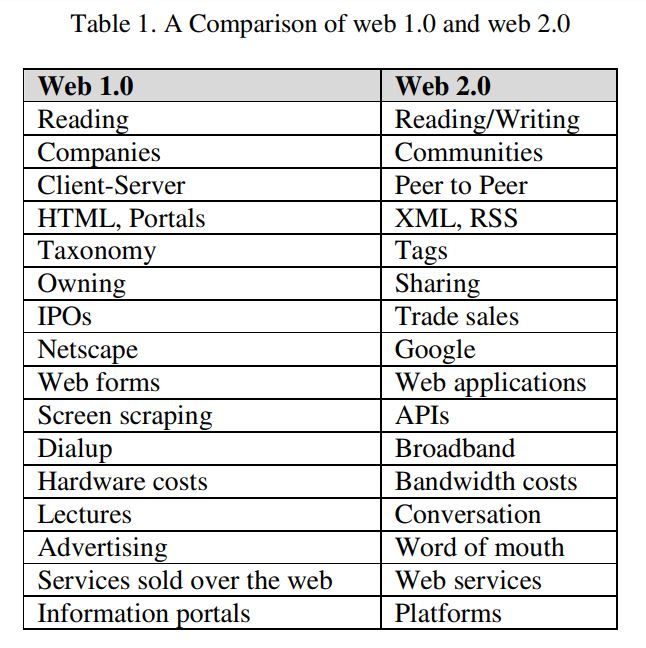
Kami juga ingin mendapatkan maklumbalas tentang laman web Perpustakaan UiTM yang ada sekarang kerana kami sedang berusaha menaiktaraf laman web sedia ini kearah laman web yang terkini ..boleh lihat perkembang evolusi laman web di artikel berikut Evolution of The Web : Web 1.0, web 2.0, web 3.0 , web 4.0 , web 5.0 and beyond
Oleh itu para peserta bengkel atau pengguna laman web perpustakaan juga diminta mengisi maklumbalas laman web disini https://tinyurl.com/y8meazr8 atau boleh scan QR code dibawah ini , Kerjasam semua didahulukan dengan ucapan terima kasih.
Hari Literasi Antarabangsa diperingati di seluruh dunia pada 8 September sebagai satu cara untuk meraikan bagaimana kemahiran membaca dapat mengubah kehidupan dan juga untuk memberi perhatian kepada berjuta-juta orang yang tidak mempunyai akses kepada pendidikan dasar atau program literasi.
2018 theme for #literacyday is 'Literacy and skill development' which focuses on integrated approach of persistent literacy, skills challenges and new skill demands for the VUCA world. Big support to UNESCO for the initiative!
On International Literacy Day 2018, UNESCO calls on the international
community to promote combined approaches to literacy and skills
development and fulfill the promise of the 2030 Agenda for Sustainable
Development to ensure that no is left behind.
In an increasingly digitized and globalized world, literacy is more
vital to navigate life and work than ever. But around the world, 750
million adults still cannot read and write. The rapidly changing labor
markets require that skills are developed throughout life.
By combining literacy learning with skills development, the most
vulnerable populations can be supported. Integrated approaches to
literacy and skills development throughout life allows people to access
resources that open doors to decent work opportunities and improved
lives.
Learn more on the International Literacy Day website: Literacy is the cornerstone of peace & sustainable development. Join UNESCO in spreading the message! International #LiteracyDay is coming up, and this year the focus is on literacy in a digital world! Learn more: http://en.unesco.org/themes/literacy-all/literacy-day #worldliteracyday #literacyday #literacyforall #literacygoesglobal #skilldevelopment #globalization #digitization #sustainablegoals2030
THE84th World Library and Information Congress, the first for Malaysia (after two other bids previously), will open in Kuala Lumpur from Aug 24-30. The theme "Transform Libraries, Transform Societies", with the sub-theme: "Reaching out to the hard to reach" – clearly points to the challenges ahead as libraries, like many knowledge-based organisations, face an uncertain future.
Malaysia, the host country, is no exception when its policy expressly directs us "Towards developing a (Malaysian) society that is characterised by a reading and knowledge culture, by 2020", which is just around the corner when she is supposed to be transformed.
More than that Malaysia has in fact recently crafted out an unprecedented (and unplanned) societal transformation in the 14th General Election, which took place barely three months ago on May 9.
Malaysians from all walks of life decided to do this peacefully through the ballot box in the most creative way to elect a new government after more than 60 years.
This makes the transformation a unique one, more so when it is realised without any form of violence, let alone the loss of life that is often accompanied with a tumultuous and unexpected change of such dimensions. There was hardly an overt protest of any kind post-election reaffirming the need for more changes as promised, notably reaching out to the hard to reach in the same spirit of the sub-theme of the conference.
It deals directly with the irony of today's reality, namely, as the world is allegedly getting smaller in reach and distance, disparities and discrimination among the various sectors of the seven billion global inhabitants somewhat widens in stark contrast thanks to the ceaseless proxy wars and terror waged ever since the turn of the 21st centuries.
This can only mean that "Reaching out to the hard to reach" is even harder to conceive, what more to translate into reality. Meanwhile, it culminates into a worsening exodus of human migrations breaching numerous boundaries in the so-called "borderless" world. More ironic still is when many nations closed their "borders" in an attempt to keep out the desperate migrants, endangering thousands of innocent lives, if not wasting them at the same time.
Reportedly, since the International Conference on Population and Development of 1994 the international migration issue and its relation to development has risen steadily on the agenda of the international community.
So much so the 2030 Agenda for sustainable development includes several migration-related targets and calls for regular reviews of the progress toward their achievement.
Not surprisingly, the number of international migrants worldwide has continued to grow rapidly in recent years, reaching 258 million in 2017, up from 220 million in 2010 and 173 million in 2000.
It is against this harsh back-ground that the theme of the conference must be read. Invariably, libraries need to clarify their reason(s) for existence within the transformational theme as claimed.
Ultimately, it begs the question how far can "libraries" effectively touch "the hard to reach", not limited to just the "normal" (read peaceful) situations, but more so for those who are being grossly shut out through no fault of their own.
For example, according to International Migration Report 2017, as today's increasingly interconnected world turned international migration into a nightmare that touches nearly all corners of the globe, it simultaneously elevates conflict, poverty, inequality and a lack of sustainable livelihoods.
In other words, while it is trendy to talk about libraries embracing the latest of technologies and becoming digitally inclusive (the fourth industrial revolution in the case of Malaysia), it may still be furthest from the panacea of meeting the noble aspirations of the conference.
What is more, several sources have cautioned that some of these technologies can consume budgets that far exceed what libraries in general can afford under the circumstances.
Yet it is often said that to improve the reach to those who are hard to reach, literacy of the remotest local communities must be enabled optimally, a tall order by any count.
As reminded by the Malaysian experience, transforming the Malaysian society is fraught with challenges because of the widespread diversity. Not only is it multiracial, multi-religious and multilingual, it also reflects an urban-rural dichotomy, the rich-poor socio-economic divide, with varying literacy levels including that of information versus knowledge silos to say the least.
We have not even broached the subject of "wisdom" as a future destination following the oft-quoted knowledge explosion phenomena.
What is rather obvious, as knowledge continues to multiply, re-imagining what the futures for libraries are like, we remain starved for the much needed "wisdom" as part of transforming libraries prior to that of societies.
On this note there is much to look forward to from the "wisdom" of the 84th Congress given its list of impressive speakers, not least Malaysia's own chief secretary.
After all, Malaysia has been said to be transforming under his watch for about a decade before the new government swept into power.
The time to be wiser has come and libraries must embrace this before societies are "suffocated" by more knowledge sans wisdom; and putting the billions who are hard to reach in an even worse situation threatening "libraries" to be irrelevant in meeting the urgent needs of all humanity.
The writer is the rector of the International Islamic University Malaysia, and the chairman of USIM Board of Directors.
This is What Happens in an Internet Minute ? Apa Yang Terjadi di Internet Dalam Seminit ?
Dalam kehidupan seharian kita , satu minit mungkin tidak kelihatan seperti banyak perkara yang berlaku. Tetapi apabila kita lihat ke skala luas internet, satu minit masa berjalan lebih jauh daripada yang pernah kita bayangkan. Itu kerana internet mempunyai tahap skala yang tersangat besar sekarang dimana tak terfikirkan oleh akal fikiran kita haa..haa tak tercapai akal ku... Tetapi dengan adanya kajian tentang Data Raya (Big Data) yang merupakan satu ledakan informasi yang seiring dengan pertumbuhan ekosistem penggunaan mobile dan data internet. Pelbagai jenis data berstruktur dan tidak berstruktur daripada media sosial seperti blog, facebook, twitter telah menyokong pertumbuhan Data Raya yang besar, pelbagai, tidak terbatas dan bernilai (volume, variety, velocity, value) sehingga kepada terabytes dan petabyte data. 2019 Pada 2019 data yang dihantar sangat besar , setiap minit, lebih 1, 000,000 pengguna log masuk ke Facebook, dan lebih 347,222 pengguna skrol menerusi Instagram.
Di samping itu, 41.6 juta mesej dihantar antara pelbagai individu di WhatsApp dan fb
2018 Pada 2018 data yang dihantar sangat besar , setiap minit lebih 973,000 pengguna log masuk ke Facebook, dan lebih 174,000 pengguna skrol menerusi Instagram. Di samping itu, 38 juta mesej dihantar antara pelbagai individu di WhatsApp. Semua itu hanya sekilas gambaran yang lebih besar - lihatlah infographic di bawah untuk mendapatkan lebih banyak maklumat dan statistik.
This is What Happens in an Internet Minute [Infographic]
Here are the full stats on what happens every internet minute 2016: 701,389 logins on Facebook 69,444 hours watched on Netflix 150 million emails sent 1,389 Uber rides 527,760 photos shared on Snapchat 51,000 app downloads on Apple’s App Store $203,596 in sales on Amazon.com 120+ new Linkedin accounts 347,222 tweets on Twitter 28,194 new posts to Instagram 38,052 hours of music listened to on Spotify 1.04 million vine loops 2.4 million search queries on Google 972,222 Tinder swipes 2.78 million video views on Youtube
EVOLUTION OF THE WORLD WIDE WEB: FROM
WEB 1.0 TO WEB 4.0
Web 1.0, web 2.0, web 3.0 and
web 4.0 were described as four generations of the web. The characteristics of the generations are
introduced and compared. It is concluded web as an information space has had much progress
since 1969 and it is moving toward using artificial intelligent techniques to be as a massive web
of highly intelligent interactions in close future.
A story of levels
Web 1, 2, 3 ,4 ... Each level seems to distance the user from the material and technical contingencies, to bring transparency in the exchanges and to open on new functionalities. And since the function creates the organ, it profoundly changes the whole of society.
Web 1.0: it makes computers talk to each other. We replicate what already exists at the level of contents and dynamics, we remain in the diffusion, of a person towards several. It can be the simple transposition of a product catalog on a commercial site.
Web 2.0: it makes people talk to each other. Internet users are participants. They are both "consum'actors" and "consumers". They interact. They bring value to the network and tools with the data they publish and manipulate.
Web 3.0: it makes objects talk to each other, with the emergence of the mobile web and the semantic web. We also speak of the conjunction of the semantic web and the Internet of Things [1]. The information is enriched. For example, the date 01 April 2024, which was previously just a succession of characters, becomes an object recognized as a date by the programs. Thus, she can become April 1st, 2024 in a system that translates dates into American English. We can also ask for dates after January 1, 2024, so include documents, such as this one, that speak of April 1, 2024. The same goes for people, places, telephone numbers, geographic coordinates. In short, all that can benefit from not being only text, and take meaning (hence the semantic adjective). The web is intended for these semantic developments with attributes that page developers can add, which allows to..
Web 4.0: according to David Fayon, in Web 2.0 and beyond [2] , it will be about adapting the objects to the behaviors, habits and preferences of the user leaving room for the implicit. This web is not for now, because it requires phenomenal processing power, which could meet the barrier of the evolution of computer components, or the depletion of natural resources. Let's not forget that the internet is becoming more and more greedy in electricity.
History of the Web
Web 0: The Internet was officially created in 1989 with a proposal from Tim Berners-Lee, a computer scientist working at the European Organization for Nuclear Research (CERN). He proposed an open computer network to keep track of research at CERN. He implemented the first successful communication between a web browser and a server via the internet that next year. Beginning with that first website in 1991, the World Wide Web Project, Berners-Lees lobbied professors, students, computer programmers and Internet enthusiasts to create more browsers and servers for the internet.
Web 1.0 : By 1999, there are approximately 3 million web sites [1]. The majority of these sites are static, read-only sites. Users preferred to navigate the web through link directories of Yahoo. Web 1.0 era consisted of search engines.
Web 2.0 : While Web 1.0 was the read-only Internet, Web 2.0 is the read-write Internet. Web 2.0 participates in content creation through sharing and collaborating, such as social media and blogging. By 2006, there are approximately 85 million websites [1]. In Web 2.0, the two game-changers for the Internet are Wikipedia and Facebook. As discussed in the Socially Enabled Helpwiki, Web 2.0 is really the beginning of collaborative problem solving using the Internet. Individuals query users, via a help website, regarding a problem or issue they may have and receive help from users in their area, country, or anywhere across the globe. As help websites like web forums and wikis mature, along with the Web, business becomes more adept at leveraging these communities to their advantage.
Web 3.0 :The newest form of the Internet, our current Web 3.0, is known as the semantic web. By combining a semantic markup and web services, Web 3.0 promises the potential for machine readable content, developed so machines can directly interact with each other. Web 3.0 means to standardize the systems, languages, publications and tools that have already been developed, as well as provide structure to date and link systems more efficiently for reuse across various applications. Semantics merely add extra information to help users understand the meaning of the information. Web 3.0 links various data items together, (examples such as people, books or songs) to create context, and, in turn, context gives meaning. Web 3.0 also sees the emergence of 3D virtual and interspatial internet, this application goes beyond gaming and is rapidly evolving. Signs of Web 4.0 abound, according to the Forbes magazine article, The Five Most Disruptive Innovations at CES 2014, innovations like wearable devices and embedded sensors are already being developed [2].
By 2016, the Internet has more than 8 billion websites.
A story about the Semantic Web
Web 4.0 is an open, linked and intelligent web. Web 4.0 will also load web pages quicker with impeccable results.According to computer engineers Sareh Aghaei, Mohammad Ali Nematbakhsh, and Hadi Khosravi Farsani, Web 4.0 will be comparable to the human brain [4]. It is often characterised as the Web OS – the entire web being a single operating system where information flows from any one point to any other. Web 4.0 is also known as symbiotic web. The goal of the symbiotic web is interaction between humans and machines in symbiosis. The line between human and device will blur. Web 4.0 will interact with users in the same way that humans communicate with each other. Web 4.0 environ will be an “always on,” connected world. Users will be able to meet and interact interspatially on the web through the use of avatars. According to futurist Daniel Burrus, phones and other devices will no longer require screens to navigate the internet [5]. Other entertainment systems, such as televisions, will rely on holograms to communicate information [7]. According to the founder of Squidoo Seth Godin, Web 4.0 will require ubiquity, identity, and connection [6] [13].
Throughout the last few decades, Hollywood has produced their vision of the future involving the use of computers. Ironically, many screenwriters, producers, and directors were close with their prediction and depictions of computers. Films such as Stanley Kubrick’s 2001: A Space Odyssey and Spike Jones’ Her present their own ideas regarding the future of computers and connectedness.
As of 2014, there is currently no definition for Web 4.0. Burrus provides the following example of how the relationship between human and machine will be re-defined:
“Good morning. You’re flying to Boston today. Take a raincoat, it’s raining. By the way, that fight you were taking, it’s already been canceled. Don’t worry about it. There was a mechanical. I’ve already booked you on a new one. I’ll tell you about on the way to the airport. But remember you’re going to exercise every day and I’m here to remind you that you’re going to exercise.” And you might say, “I don’t know if I want to exercise today,” and It’ll show you a nude profile of yourself. And you’ll say, “You know what, I think I’m going to exercise today.” [2]
The Internet of People
When Web 4.0 becomes a mature system, it will create a new symbiotic relationship between humans and machines. The emergence of Web 4.0 human – machine communication has already begun. Currently, alarm companies and cable companies have the ability to link two very different businesses for mutual benefit. Consumers now have access to cheap home security using pre-existing broadband and inexpensive web cameras.
The symbiotic relationship will extend to Web 4.0 by acting as a personal assistant or agent for the user. Through the use of facial recognition, an ultra-intelligent electronic agent [5] will recognize users whenever they log onto an internet connected device. The ultra-intelligent electronic agent will constantly be available. The user will determine its’ look and personality via an avatar. Ask the agent a question and it will answer. It will also be intuitive of the user’s needs.
Here is an example of available uses of Web 4.0. Perhaps you are going to a convention and need to book a hotel. Once you are registered for the convention, a window will pop up with suggestions for hotels in the area based on your previous booking criteria.
Already there has been integrations of Web 4.0 in our everyday lives. For instance, when a user visits Youtube or Amazon and creates an account, recommendations for videos and books are listed based off previous searches [7].
The Internet of Daily Life
Web 3.0 began the development of machine-readable content for Web 4.0. This means that smart appliances will be connected to the Internet and will be able to perform tasks without human involvement. For example, through the use of radio frequency identification tags (RFID), your refrigerator will be able to sense that it is running low on milk, and it will contact the grocery store to order more milk. Then, the refrigerator will send you a message on your smart phone to pick up the milk on your way home from work. RFID tags are tracking devices that are already used in cars that use toll highways. They are also used in supply chain systems and automotive assembly and farming.
The use of RFID tags will greatly increase in Web 4.0. RFIDs will create a living, connected web of content, all linked to the Internet. Imagine having all food items tagged at the grocery store so you do not have to unpack your order at the check-out. The cashier, if there is one, will simply scan your whole cart and give you the grocery total. Web 4.0 will also allow grocery store management to properly predict how many products they should carry. This will also allow grocery stores to decrease the amount of wasted food, like perishables such as fruit and vegetables [13]. With the connected web, an individual, when traveling home, may pass a grocery store and will be instantly notified to pick up something he or she may need, such as milk [7].
Another fundamental characteristic, as noted by Karan Patel, is the combination of virtual reality into the user’s everyday life. For instance, the user will be able to Google their home to search for misplaced items, such as car keys or a cellphone [4].
With the integration of Web 4.0 into daily life, even travel directions will be revolutionized [9]. Constantine Valhouli suggests that Google Maps will soon contain mash-ups providing directions, narratives, and coordinates [9]. It can provide instructions that reduce ten minutes of typical commuting time by providing alternative route. However, according to Faris Yakoub of McCann Erickson, New York, one of the most innovative characteristics of Web 4.0 will be the integration of social media into travel [9]. Yakoub uses the example of re-routing your way to work in order to bump into an old friend [9], or if taking a ‘sick’ day off of work, an individual may be able to avoid their boss. Both of these are examples of how Web 4.0 can reinvent social interaction.
The Internet of Business
As mentioned, the use of RFIDs is already commonplace in many industries, and is constantly expanding. Another area that will be very different with Web 4.0 is retail shopping. With the development of 3D browsers, shoppers, via their avatar, will be able to virtually and interspatially travel the web and go into showrooms and stores to browse for products they like. If they decide to purchase an item, they would receive a message on their device from their personal assistant letting them know if same item is less expensive at another site. Author Lief Larson suggests that Web 4.0 will revolutionize customer service because of the complete control of the customer. Customers will access a particular website, such as Amazon or Ebay, and will use audio and video equipment to communicate their requests with a noted representative of the business.
Journalist Jean-Paul Edwards writes that companies will be able to establish links with other companies using Web 4.0 to offer new services at a lower price [8]. Edwards references the merger of Comcast and AT&T, which link two very different businesses for mutual benefit offering an inexpensive home security system using the Internet and video surveillance, allowing homeowners to continuously check in on their homes. Web 4.0 will allow various types of companies to share information and combine their services for everyone [8].
In addition, Edwards notes the impact on other services such as bus transportation. Edwards uses the example of Google Driverless cars that rely on signals from signs in order to navigate buses on their respective routes. Although this could save money by eliminating the cost of bus drivers, liability and legal issues still need to be addressed.
Building construction will also be affected because buildings typically have 20-30 environmental systems, such as lighting and water [9]. Web 4.0 will literally be the “Internet of Things,” as every appliance will be given an IP address. Constantine Valhouli also suggests that the market industry will soon develop the first “intelligent buildings”. These buildings will have an IP Platform in which all of the building systems will be integrated using Web 4.0. Sensors will also be placed in the building systems and appliances and will be able to detect if there are changes. One building that has already experimented with Web 4.0 in their building systems and appliances is the Hotel 100 in Seattle, Washington. At Hotel 100, minibars in every room of the hotel are wired to the Internet. Streams of data can be instantly transferred from the minibar back to hotel management. Matt Hagerman, the general manager of the Hotel 100, claims that this connectivity allows hotel management to recognize the needs of guests, and even grant them special perks. For instance, if a guest purchases ten drinks from the minibar in their hotel room, Hagerman and his staff receive data information, and, in turn, will send the guests a round of free drinks. Hagerman even admitted to surprising some guests with a bottle of Jack Daniels the next time they book a hotel stay, and additionally claims that Web 4.0 will revolutionize businesses, (like Hotel 100). The integration of “intelligent buildings” and connected IP Platforms allows Hagerman’s employees to focus on other tasks, while the intelligent system automatically enters the data from the minibar [9].
The Internet of Medicine
Biomedical chip implant technology, currently in its infancy, will emerge with Web 4.0 to alleviate many diseases of the body. As of October 2014, a woman in a Toronto hospital has partial sight restored after a surgery that placed retinal implants in her eyes [10]. Biomedical chip implants bridge the gap between human and machine, allowing the machine to communicate with the brain and to restore function that was previously lost to disease. Another Web 4.0 example of the symbiosis of human and machine is the Braingate Neural Interface System [11] which is being developed by a team of physicians, scientists and engineers from Brown University. The goal of Braingate Neural Interface System is to re-enable the severely disabled, and give them the ability to control a cursor on a computer screen or to type on a virtual keyboard, simply by thinking about the movement of one’s own hand.
Conclusion
Since 1989, the Internet has progressed from read-only sites to the current, semantic web of 3.0. The web of today will eventually progress into the ultra-intelligent, open linked, Web 4.0. The future web of 4.0 will provide connections between human and machine to create interactive data for a new, symbiotic Internet.
Expectations of constant connectivity in Web 4.0 will affect many sectors of daily life. The use of Web 4.0 in everyday activities will help symbiosis between humans and machines. With the use of intelligent data, virtual realities will become more and more common. Introducing RFID tags into appliances regularly found within a home will help connections not only between humans and machines, but also interrelations between machines. These appliances and applications will be intuitive to the users’ needs [7].
Web 4.0 will also change the future of both business and medical fields. Again, RFID tags will be added to different businesses to help improve the experiences of shoppers. Web 4.0 will be consumer driven, and will give complete control to the shoppers. Additionally, the symbiotic web will help create “intelligent buildings.” Similar to helping improve users’ lives, the “intelligent buildings” will use sensors and IP platforms to continuously update information about the individual staying at the hotel [9]. The connection between buildings and machine may one day remove the need for hotel personnel. Moreover, the medical field will greatly change with the future inclusion of Web 4.0. Medicine will ultimately support the interconnection of human and machine, allowing ill patients the ability to heal with symbiotic systems.
The future of Web 4.0 is meant to revolutionize the daily lives of humans. By creating interrelationships between human and machine, Web 4.0 will give users unique and interconnected social and personal lives. This open, linked and intelligent interface will be the future of the Internet. The Next Web of Open, Linked Data and Intelligent Web = Emotional Web nothing is impossible, is this possible?
Web 5.0 will be telepathic in which you just think of the question and know it instantly or open website by thought,
Web 6.0 will be embedded to your nervous system, in which you get to experience website or videos in a virtual reality,
Web 7.0 is probably life creation with matter energy manipulation to acheive any effect etc,
Web 8.0 true omnipotent powers, able to reshape reality itself etc..
Web 9.0 ???
Web 10.0 ???
Sir Tim delivered his Turing Award Lecture at the ACM Web Science Conference in Amsterdam on May 29, 2018, titled "What is the World Wide Web and what is its future? What could it be, what should it be? What is the Web we want?







 Posts
Posts


